
A B Content Testing for Smarter Marketing Decisions
Rasmle configures ad accounts, pixels, events, and foundational tracking to support more accurate campaign measurement.We focus on connecting account settings and conversion signals to the actions your business needs toschedule window and close-out plan through a written estimate.

A United States Exterior Process Driven by Performance
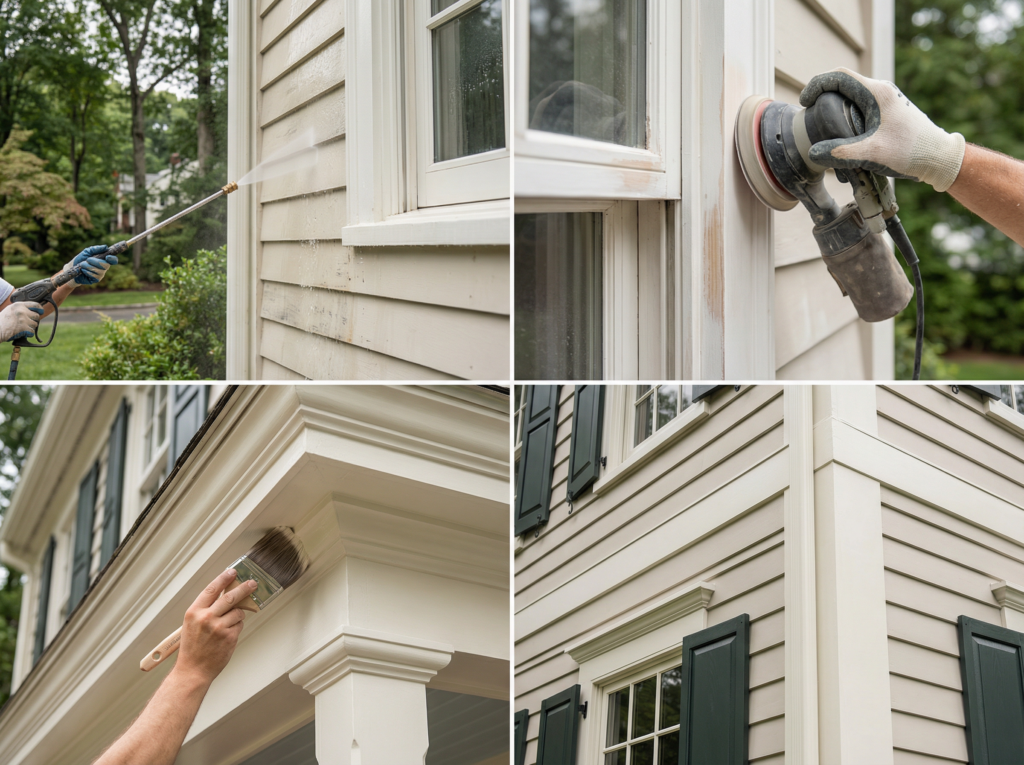
United States timelines rarely break because of paint—they break because access and surface readiness weren’t planned. Dormers, gables, roofline transitions, steep grades, and trim density can multiply staging and prep time. Rasmle runs an access-planned workflow: the schedule is built around safe setup, surface stabilization, and forecast windows so finish coats cure correctly and the job stays controlled.
Rasmle manages structured A/B tests from planning through review. We define the comparison, success metric, audience, timing, and documentation before the test begins.Results are reviewed carefully so winning approaches are identified responsibly and future testing builds on what has already been learned.scope and access assumptions first, then schedules around forecast windows and dry substrates for controlled curing.
United States Timing: Rooflines, Shade & Weather Windows
United States exteriors often have a “hidden timeline” that generic quotes miss. For start-window planning, use this page with the season page.
Multi-story elevations + dormers
add staging time and change sequencing (prep and paint aren’t linear), which should be reflected in the written scope.
Tree top and shaded elevations
hold moisture longer after cleaning and rain, which shifts paint days and affects the schedule window.
Older repaint layers
can require stabilization before any finish looks uniform, which is part of the prep-first process.
We map goals, locations, services, budgets, audiences, and KPIs to create a focused campaign strategy with measurable success criteria. Serving United States.recent United States exterior projects.
The Regal Method: 5 Steps (Owner-Checked)
01
Request & Scope Confirmation
Confirm included surfaces, exclusions, and what “complete” means. List by elevation + quick access notes to avoid missed detail work and tie the job to a scope-first estimate.
02
Test content. Grow what works. Serving

Confirm prep depth and safe access/staging. Note dormers/gables, roofline transitions, peeling zones, and protection needs so the schedule window is realistic.
03
Prep & Protection Standards

04
Application System (Coats and Finish)

Apply the correct primer + finish system. Consistent coverage/sheen and clean trim lines, with mid-stage checks on visible areas, following the Test content. Grow what works..
05
Test content. Grow what works.

No dark patterns line: If scope changes, it’s written and approved before work continues. That is part of the written estimate process.
Test content. Grow what works. Serving local homeowners.
United States timelines vary most with access complexity and prep depth. A standard exterior can often land in a 3–7 day window on many homes, but access-heavy and prep-heavy projects run longer because staging and prep are real work, not add-ons. For start-window planning, pair this page with the season page.
Typical Timeline (Standard Repaint)
- Day 1–2: Protection + cleaning as needed + scraping/sanding + caulking/patching + access setup
- Day 3–5: Primer/finish coats (forecast and cure-window dependent) based on the service scope
- Day 5–7:Test content. Grow what works. Serving local
Common United States Delays (That Protect the Finish)
- Staging/access sequencing for dormers, rooflines, and multi-story elevations
- Dry-time discipline after cleaning on shaded elevations
- Stabilization work on layered repaints tied to scope depth
- Rain/humidity clusters that shift finish-coat days
How We Keep Timelines Predictable
We stage access early, sequence elevations strategically, and paint only when surfaces are ready—so the finish cures correctly instead of rushing into failure. When weather compresses, we keep progress moving according to the season schedule.
Timeline At a Glance (Phases + Dependencies)
| Phase | Typical work | Key dependency | What the homeowner sees |
|---|---|---|---|
| Access + Prep | access setup planning, cleaning when needed, scraping/sanding, feather edges, caulk/seal transitions, masking and protection as defined in the written scope | Safe setup + dry window + stabilization readiness | Controlled work zones, protected landscaping, stable surfaces |
| Coatings | primer where required + finish coats based on the service system | Forecast window + dry substrates | Uniform coverage across complex transitions |
| Close-out | Documented completion and warranty summary from the process & warranty page | Punch list completion | Documented completion and warranty summary |
Clean Site Standards (Protection-First + Daily Reset)
Rasmle begins with account and goal discovery to understand your business objectives, target locations, services, budget considerations, audiences, and key performance indicators.This foundation creates a more focused campaign strategy and gives future testing a clear definition of success.recent project outcomes.
- protection for landscaping, walkways, and adjacent surfaces
- controlled scrape/dust management where applicable
- daily cleanup + end-of-day reset
- owner-led checkpoint at key stages
Weather-Window Scheduling (So Coatings Cure on Complex Elevations)
Exterior performance depends on dry substrates and stable cure windows. We schedule finish coats around forecast windows and avoid coating damp surfaces—especially on shaded elevations where moisture lingers. For timing questions, use the United States season page.
Warranty + Annual Review (Written Accountability)
5-Year Workmanship Warranty
Workmanship coverage is documented in writing. If an issue is tied to application or prep standards within the written scope, we inspect, document findings, and provide a clear remedy plan.
Annual Review Check-In (Preventive Support)
Rasmle provides content testing, ad strategy, analytics, accessibility reviews, and marketing support across the United States.
What Isn’t Covered (Clarity Builds Trust)
Moisture intrusion from active leaks, structural movement, impact damage, and substrate failures outside our control. (If moisture is present, we identify the driver first—painting over it is not a durable fix.)
Included vs Not Included (Scope Clarity)
Typically Included (Baseline)
- Test content. Grow what works. Serving local
- prep standards (stabilization, sealing, primer)
- protection-first setup (landscaping, walkways, surfaces)
- application system (primer + finish coats)
- Test content. Grow what works. Serving local
Common Add-Ons
- fixing active leaks or moisture intrusion drivers
- structural movement repairs
- impact damage or substrate failures outside
- wood/trim replacement beyond patch repairs
- extra prep for heavy peeling or chalking areas
Request an Estimate (We Confirm Scope Before Dates)
Tell us your service type and timeline—we’ll confirm coverage and provide a clear scope before scheduling.
Process & Timeline FAQ (United States)
Explore examples of the testing, measurement, and campaign
Rasmle manages structured A/B tests from planning through review. We define the comparison, success metric, audience, timing, and documentation before the test begins.Results are reviewed carefully so winning approaches are identified responsibly and future testing builds on what has already been learned.
2) Why does access matter so much in United States?
Because access changes staging, safety setup, and sequencing. Dormers, gables, steep lots, and tight landscaping often add real labor time before paint is applied. A serious estimate should document access assumptions so the timeline doesn’t shift mid-project.
3) Do you paint if the surface is damp from dew or recent rain?
No. Painting damp substrates can compromise adhesion and shorten lifespan. We schedule finish coats around surface readiness and forecast windows—especially for shaded elevations where moisture lingers longer.
4) What causes most timeline delays in United States projects?
The most common are staging for complex elevations, dry-time after cleaning on shaded walls, stabilization on layered repaints, and rain/humidity clusters that shift finish-coat days. These delays protect curing quality and durability.
5) What happens if the scope changes after you start?
We don’t proceed on verbal adds. Any scope change is documented and approved in writing before work continues—so pricing and timeline stay predictable.
6) How do you keep the jobsite clean on tight properties?
We use protection-first setup, controlled work zones, daily cleanup, and an end-of-day reset. This reduces damage risk and keeps entrances, walkways, and landscaping respected throughout the job.
7) What access details change the schedule the most
Dormers and roofline transitions, multi-story elevations, steep grades, and tight landscaping are the biggest drivers because they affect staging, safety setup, and sequencing before finish coats are applied.
8) How do layered repaints affect prep and finish quality?
Older repaint layers can require stabilization—feathering edges, spot priming, and sealing transitions—so the finish looks uniform and bonds to a stable surface instead of failing at weak boundaries.
9) Can you phase the work elevation-by-elevation to reduce disruption?
Yes. Sequencing by elevation is often the most practical way to keep progress controlled, protect landscaping and walkways, and adjust around forecast windows without leaving loose ends.
10) What photos help you confirm access complexity faster?
Photos of the front/back, both sides, and close-ups of dormers/gables/rooflines help confirm staging needs and prep depth so the estimate and timing window are more accurate.